- Jan 24
The Gentle Reset: How Mindful Drawing Nourishes Your Nervous System
- Alina Smolyansky
- Neurographica
- 0 comments
As life becomes fuller and more layered, many people notice that the world feels louder than it once did. Responsibilities evolve. Roles shift. The pace that once worked may no longer feel sustainable. During these periods, the nervous system often asks for something very simple, safe and quiet.
Well-being is not always about adding another practice or improving yourself. Sometimes it begins with a pause. A gentle reset that allows the body and mind to return to center before moving forward again.
This is where mindful drawing can become surprisingly supportive.
A simple way to come back to yourself
Neurographic Art uses lines, shapes, and repetition to create a visual dialogue between hand and mind. It does not ask you to analyze your feelings or explain them in words. It invites you to slow down and let the drawing process do the work.
When you draw flowing, organic lines and soften the sharp intersections between them, many people experience a sense of release. The rhythm of the movement and the attention required often help the nervous system settle without effort or pressure.
This is not about making something beautiful. It is about creating a moment of coherence.
Why drawing works when words feel heavy
There are moments when thinking feels exhausting. Talking feels repetitive. Drawing offers another entry point.
Manual drawing engages the body directly. The hand moves. The eyes follow. Attention narrows. This simple coordination can help interrupt mental overload and bring awareness back into the present moment.
Many students tell me they feel calmer without knowing exactly why. That is often enough.
A gentle practice you can try today
If you have five minutes, you can try this small reset.
Find a quiet place and a pen you enjoy holding.
Take a few slow breaths and allow your shoulders to soften.
On a blank sheet of paper, draw one continuous line across the page. Let it wander.
Notice where the line crosses itself.
Round each sharp intersection until it feels smooth and connected.
As you do this, imagine softening the edges of your day. There is nothing to fix. Nothing to judge. Only movement and attention.
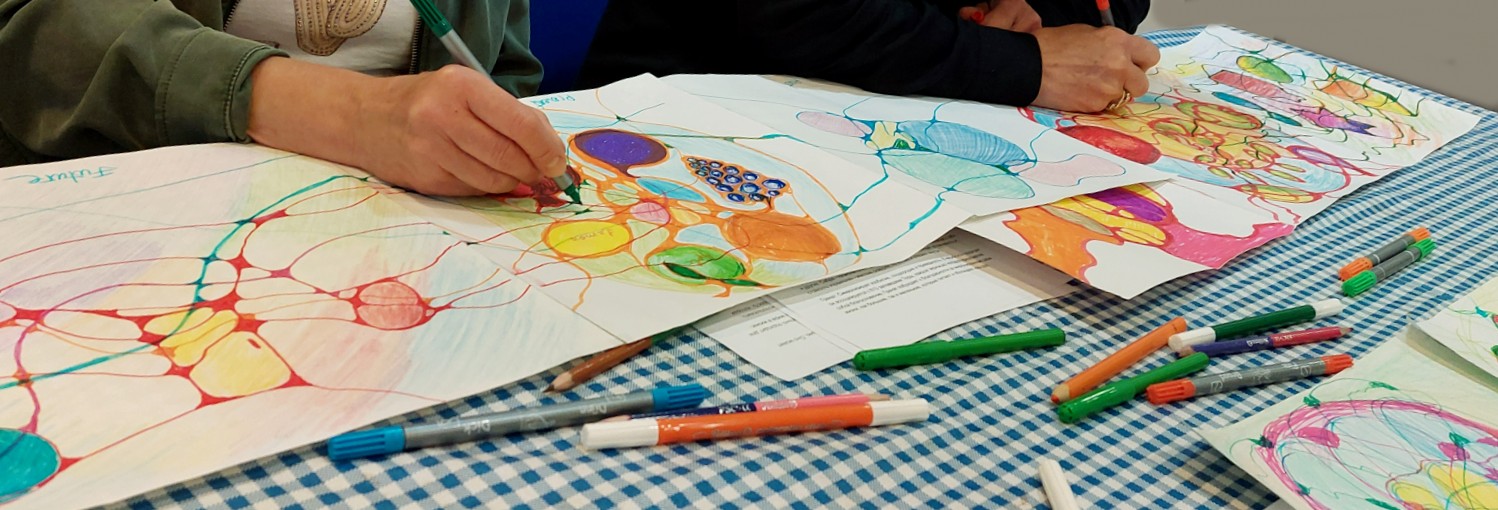
Example of Neurographic drawing
From Neurographic Art to NeuroGraphica
Many people discover this practice through Neurographic Art and later become curious about NeuroGraphica itself. NeuroGraphica offers a structured method and clear algorithms, developed by Dr. Pavel Piskarev, that support deeper self-reflection and consistency.
If you enjoy the calm and clarity that simple drawing brings, learning the foundations can help you develop a reliable personal practice rather than occasional moments of relief.
An invitation to explore more deeply
This February, I am offering a small-cohort Basic User course in NeuroGraphica. We focus on practical drawing, clear structure, and real integration into daily life.
You will receive individualized feedback on your drawings, guided explanations, and space to ask questions. The group is intentionally small so that each participant is seen and supported.
If this approach resonates with you, you are welcome to explore the Basic User course with me. It is designed as a calm, grounded introduction and a place to begin with confidence.
Sometimes a gentle reset is all we need to move forward with clarity.
Curious to explore NeuroGraphica Art?
Join my email circle and get the Free NeuroGraphica Starter Course, plus biweekly inspiration, course news, and exclusive subscriber discounts.