- Today
Becoming a NeuroGraphica Instructor: My Experience After Seven Years
- Alina Smolyansky
- Neurographica
- 0 comments
On December 1, 2019, I submitted my diploma portfolio and completed the NeuroGraphica instructor training program. It was the end of an intense year of study, drawing, and preparation. Seven years later, I thought it might be useful to look back and share my experience, particularly with those considering becoming NeuroGraphica instructors.
There is plenty of information about the different training levels and certification requirements. I've already written a separate article explaining the three levels of NeuroGraphica training and the certification pathway. Here, I'd like to focus on something different: what the training was actually like, how much work it involved, and what I discovered when I started teaching.
This is a personal account of my experience in 2019. Training programs and requirements can change, so for current technical details, I recommend checking the Institute's website.
How I discovered NeuroGraphica
Before discovering NeuroGraphica, I had been a full-time artist and art instructor for over ten years. I had previously left a career in building engineering and finance, as well as a BA in Professional Communications, to pursue art.
By October 2018, I was facing a crisis in my art business and my own creative direction. Could I continue painting symbolic art? Could I find enough students? The market was changing and swiftly moving online.
When I came across NeuroGraphica, it immediately caught my attention. It combined drawing with personal growth, bringing together two areas that mattered greatly to me.
I initially enrolled in a Basic User course for my own benefit. My first drawing brought a welcome artwork sale. Perhaps it was beginner's luck, but I was excited: it worked! I felt I had found a missing link between what I was doing professionally and what I aspired to personally.
The Specialist level seemed like an obvious next step. I imagined introducing this new form of art into my existing classes. At the time, this training was available in Russian at an accessible price, so I enrolled without hesitation.
That turned out to be an erroneous assumption. My traditional art students weren't particularly interested in NeuroGraphica and its focus on personal exploration. Later, I discovered that people attending NeuroGraphica classes weren't necessarily interested in learning to paint. Although both involved art, they attracted different audiences.
I also realized that the Specialist level alone wouldn't offer the teaching opportunities I was looking for. Instructor training became the obvious, and ultimately the only, choice.
What the instructor training involved
Luckily, the instructor program had just started, and I was still able to join. It meant committing to a year of intensive study and investing almost all the credit remaining on my Visa card.
The program, offered once a year, combined two equally substantial streams: NeuroGraphica Instructor training and Aesthetic Coaching. Each had its own assignments, portfolio, and diploma. I hadn't completed a separate Specialist certification beforehand; that component was included in the instructor program.
The first thing I discovered was how much higher the requirements were compared with the Basic User course.
We had weekly classes lasting approximately four hours, taught by Dr. Pavel Piskarev himself. Each advanced course lasted a month, with classes every two weeks and around seven to ten techniques to complete and submit. The other two class days each month were dedicated to coaching. That part attracted me less, as my goal was to teach classes rather than offer one-on-one coaching. Nevertheless, I completed both programs and received both diplomas.
I remember that year as a cycle of attending classes, completing drawings, submitting assignments and anxiously waiting for supervisors' reviews. I was also travelling back and forth to my art studio, trying desperately to offer NeuroGraphica classes in local communities, and almost losing my art business in the process.
The work outside class was substantial. We had to complete drawings for the techniques we studied, prepare a portfolio, and include personal artwork demonstrating our development. It wasn't simply a matter of following along in class. We had to practise consistently, produce the drawings, and write detailed reflections and a diploma project.
The final three months of 2019 were a marathon. As the December 1 submission deadline approached, I realized I still had quite a few drawings to complete for my portfolio. I was making three or four drawings a day to finish on time.
When I finally added the last drawing to my portfolio, I was practically jumping up and down. I could hardly believe I had finished! I submitted everything on November 30. And when it was all over, I realized I didn't know what to do next.
People sometimes ask what I would have done differently if I'd known how much effort the training would take. Honestly, if I had known everything in advance, I might not have had the heart or courage to begin and see it through.
Still, for anyone considering instructor training, I'd emphasize that the time commitment is substantial. The scheduled classes are only part of it. You also need time for drawings, assignments, portfolio work, and developing your skills. Consider whether you have enough time, energy, and financial support to sustain yourself through the program and possibly beyond. Not everyone in my cohort was able to complete it on time.
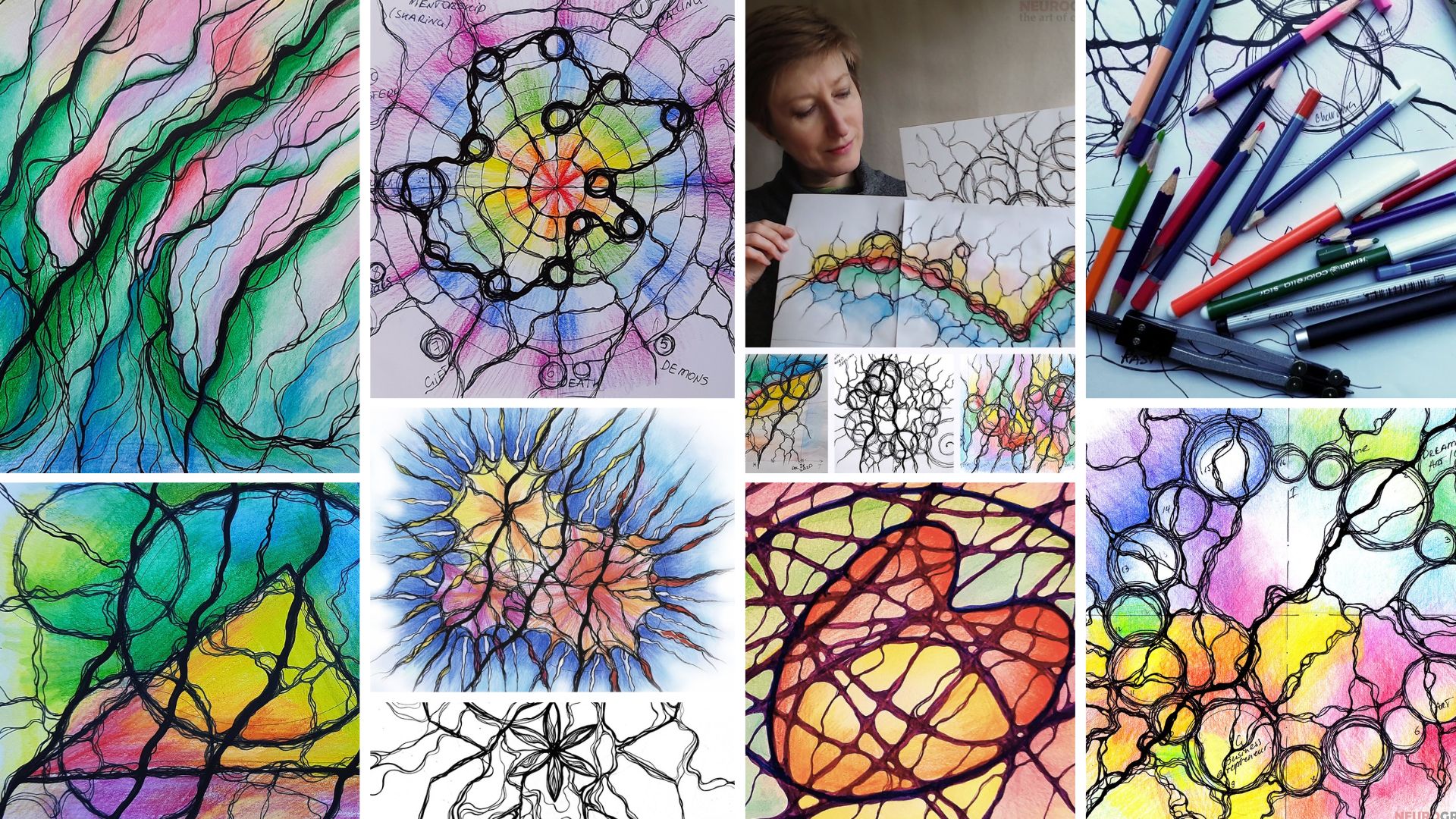
Some of the drawings done during Neurographica Instructor training
What happens after you graduate?
Completing the program and receiving the diplomas was one thing. Figuring out how to start teaching was another.
I already had experience teaching art, which certainly helped. But building a teaching practice around an unfamiliar subject presented different challenges. I had to introduce NeuroGraphica to people who had never heard of it, explain its appeal, find students, and develop courses they would want to attend.
At that time, NeuroGraphica was still relatively unknown in the English-speaking world. Even with my teaching experience and ability to explain, introducing an unfamiliar method to a North American audience wasn't straightforward.
Then, in March 2020, the pandemic changed everything.
Like many educators, I had to move my teaching online. I eventually stopped my other art classes and focused on NeuroGraphica. Interestingly, it translated very well to online teaching. Traditional art classes were much harder to adapt, while NeuroGraphica worked very well in live online sessions.
The circumstances of 2020 also created an opportunity. With so many people staying home and looking for online activities, creative experiences, and ways to work with their thoughts and feelings, interest in NeuroGraphica grew. Online teaching allowed instructors to reach students in different countries, and the method gradually became much more familiar to English-speaking audiences.
At the same time, simplified forms of neurographic drawing began spreading through social media, making the basic visual approach accessible to a much wider audience. This popularization helped bring attention to neurographic art, although informal drawing tutorials and the structured NeuroGraphica method are not quite the same thing.
Over time, my NeuroGraphica courses became my main professional activity and source of income.
While NeuroGraphica is more familiar now, it remains a specialized subject with a relatively narrow audience. The broader interest in neurographic drawing is considerably wider than the audience specifically seeking formal NeuroGraphica courses.
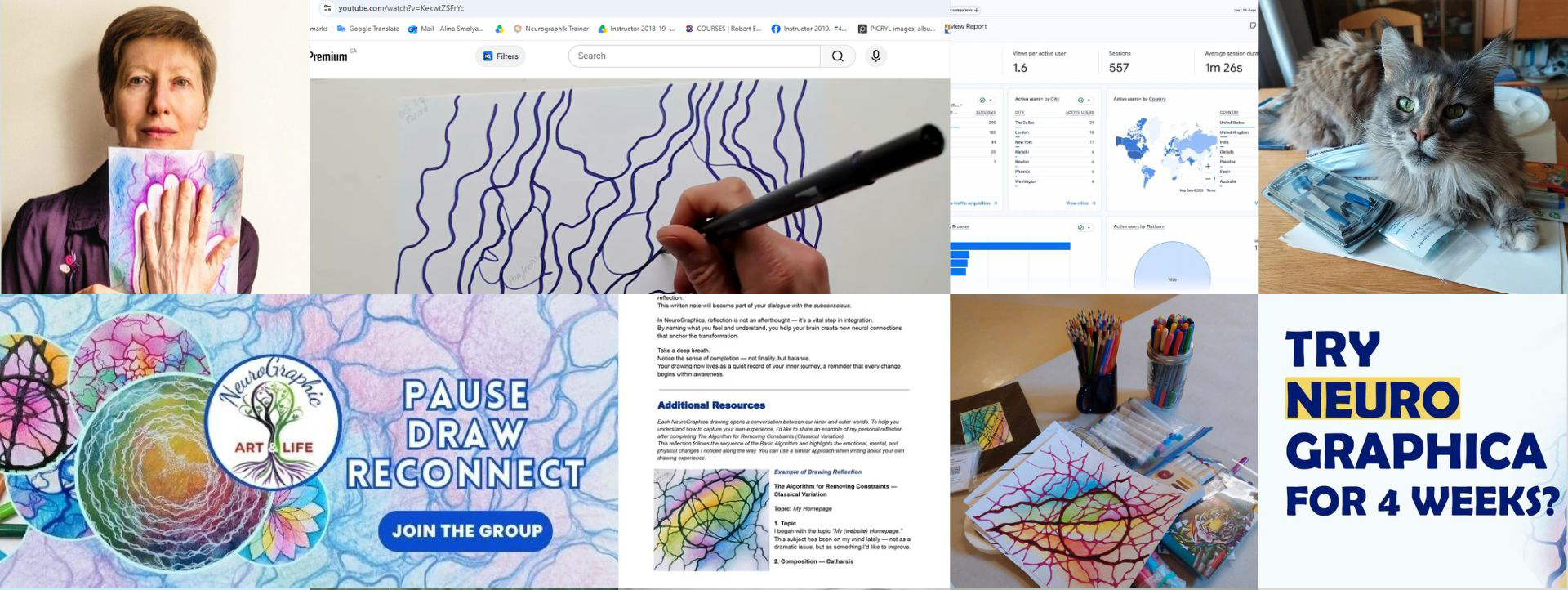
Neurographica instructor's life, building a teaching practice
Training and building a business are two different things
One of the most important things I learned is that becoming qualified to teach a method and building a viable teaching practice are two separate challenges.
Training gives you knowledge of the method and prepares you to teach it. But attracting students, communicating the value of your classes, creating courses, managing a website, building an audience, and running an educational business require additional skills.
My own background as an artist and teacher helped, but I still needed to develop a whole new set of skills to offer classes online.
If you're considering instructor training, I'd encourage you to think beyond the program itself. What would you like to do with the qualification afterwards? Do you prefer teaching groups or working with individual clients? Are you ready to create, promote, and teach online classes? Are you comfortable with the technology involved in building a website and hosting courses?
AI tools can certainly help with some of these tasks today. When I started, I had to rely on my own ability to write, create content, and work out business activities largely by trial and error, looking at statistics, enrolment results, and possible directions for development.
There's another side to teaching that is easy to underestimate. Being passionate about art and good at drawing is one thing. Teaching it is quite another. You may find yourself explaining the same things repeatedly, answering emails and questions, managing routine activities, and trying to maintain your energy without regular weekends or holidays. You also need the stamina to keep going when enrolments fluctuate or circumstances become difficult.
It's worth considering whether you enjoy not only the subject itself but also the everyday work of teaching and running a small business.
Seven years later
Seven years have passed since I completed my instructor training. I've taught many online courses, worked with students from different countries, developed my own teaching materials, and learned a great deal about online education and running a small, specialized teaching business.
My professional path turned out quite differently from what I had imagined. There was less glory and success than I might have expected, but plenty of unexpected experiences and lessons that only became clear along the way.
More recently, I've been exploring a more artistic direction through NeuroArt. I still teach the Basic User course, my main NeuroGraphica offering, introducing people to the foundations of the method through guided drawing practice.
You don't need to become a Specialist or Instructor to explore NeuroGraphica. You can begin with the Basic User level and decide for yourself how far you'd like to go. My Basic User course also offers a glimpse of some techniques from the advanced NeuroGraphica courses, if you'd like to explore further.
If you're considering instructor training, I hope my experience gives you a more complete picture of the journey: not only the effort involved in completing the program, but also what it takes to find your place as a teacher afterwards.
Further reading
How to Become a Certified NeuroGraphica Specialist or Instructor (Levels 1–3 Explained)
Explore my Basic User NeuroGraphica course. (Discount included)
Download the free NeuroGraphica Starter Guide by joining my letter (link below)
Sincerely,
Alina.
Curious to explore NeuroGraphica Art?
Join my email circle and get the Free NeuroGraphica Starter Course, plus biweekly inspiration, course news, and exclusive subscriber discounts.